Maxximus Field Notes · The Maxximus Show · Episode 11
Free & Alive Beyond 25: Ricky Aiken's Mission to Save Young Men
By Ryan Poole, Founder of Maxximus · August 27, 2026
27 years in real estate sales · West Palm Beach, FL · Father of Everett (9)
There are men doing quiet, unglamorous, life-or-death work in the communities most people never think about. Until something goes wrong.
Ricky Aiken is one of those men.
I've known Ricky for six years. I've watched him walk through 1909 with a smile on his face every single day, knowing what he's carrying. I've sat across from some of the young men in his program. I've watched what a kid looks like when one man finally decides to show up.
Episode 11 is his story.
Watch the Episode
“Free & Alive Beyond 25” The Maxximus Show Ep. 11
Ricky Aiken's full origin story, the Hope Dealer model, what Johnny Davis's death built, and the one thing every young man without a father needs to hear.
Watch the full episode and every episode of The Maxximus Show. Also available on Spotify, Apple Podcasts, and Amazon Music.
The Crisis Nobody Talks About Honestly
Here are the numbers. Almost half of Black children in America are growing up without a father in the home. 85% of youth currently in prison came from fatherless households. Boys from fatherless homes are twice as likely to be incarcerated, and 279% more likely to carry a weapon or traffic drugs.
Nature abhors a vacuum. Boys will always find a masculine model. The question is who that model is.
When the streets answer first, we know what happens. We've watched it happen for decades. We keep calling it a crime problem. It's a fatherhood problem. It's a male mentorship problem. It's a boys-without-men problem.
Ricky Aiken grew up inside that vacuum. He became the answer to it.
Where He Started
Ricky was raised in Dunbar Village, a housing project along the Tamarind corridor in West Palm Beach. His mother struggled with drug addiction. His father was not in the picture. His grandmother, who raised him, battled alcoholism. When she was sober she was the most protective, loving provider you could ask for. When she drank, things got emotionally volatile. A constant rollercoaster.
Two older brothers, who loved him, survived by selling drugs. His grandmother had seven children. Every last one of them struggled with alcoholism or drug addiction.
He was labeled emotionally handicapped in third grade. Slow. Learning disabled. He internalized it.
By middle school he was defining himself by the young men he ran with. By 16, he had dropped out of school and was selling drugs part-time while working at an after-school tutoring program. He and his mother and younger brother were living in a shed behind an abandoned house, running extension cords from a neighbor's home for power, filling jugs from an outdoor spigot for water, hunting mangoes for breakfast.
“When that's all you know, it's all you know.”
Then one night, high, he walked into that shed and something cracked open. His little brother was arguing with his mom. And for the first time he saw it, really saw it. He shouldn't be dropped out of school. His brother shouldn't be living like this. His mother shouldn't be choosing drugs over her kids.
The Lights That Came Through
Ricky will tell you the difference was not willpower. It was people.
“When you grow up in environments that are so dark, it's easier to hang onto the lights that came through.”
Godparents. A pastor. A man named Brother Carl who gave him his first job sweeping hair in a barbershop. Mentor figures who arrived in different seasons, unplanned, and poured something into him before moving on.
He did not choose a different road because he was exceptional. He chose it because someone showed up first.
That is the entire thesis of Inner City Innovators.
Johnny Davis
In 2015, Ricky and his cousin started showing up at community forums. Young men from the neighborhood, watching gun violence tear through the people they grew up with, asking why no one from inside the community was stepping up.
One of the young men in that first circle was 19-year-old Johnny Davis.
They did a news story together. Ricky remembers telling Johnny that day: “I don't know what this is we're building or what it will become, but whatever it is, it's for you.” Johnny nodded. They walked the block with a news camera. He organized his peers. He was smiling.
Less than two weeks later, Johnny was walking home from a store with friends. A car pulled up. Someone aimed an assault rifle out the window. Johnny Davis was killed.
“He will always be the foundational stone of this organization. Always. Because if you knew him, like you knew joy. He never let life get too heavy. He was defined by his smile.”
Losing him taught Ricky that advocacy was not enough. It had to become something more.
What Inner City Innovators Actually Does
The flagship is the Hope Dealer Mentoring Program, a hybrid model combining individual, group, and peer-to-peer mentoring designed specifically for the young men most at risk. The ones who would normally be kicked out of every other program. The ones the system has already labeled.
They start with a single question: If everything went perfectly in your life over the next ten years, where do you see yourself?
Not: why were you arrested. Not: what did you do. Start with the dream. Let them open. And then, once they have told you who they want to be, build a plan that connects where they are now to where they are going.
The model is called the Model for Intentional Change. What makes it work is what Ricky calls Free and Alive Beyond 25. Mentorship support that follows a young man from the time he enters the program through age 25, because that is when the brain finishes developing. 13, 15, or 21, it does not matter when they come in. They stay connected until they are through the most dangerous years.
The progression looks like this: they come in needy. They get supported. They start to see themselves differently. And eventually, they become peer mentors themselves, pouring back into the younger guys coming up behind them.
From service needed to service provider. That is the whole model.
The Numbers
In 2025 alone:
- 57 mentees enrolled
- 1,675 mentoring sessions delivered
- 86% not charged with a new crime
- 93% report feeling more hopeful and better able to handle life's challenges
These are not general youth statistics. These are young men who came in with gun charges. System-involved. Already written off by most institutions. And they are not reoffending. They are not becoming statistics. They are becoming men.
Youth with a mentor are 55% more likely to enroll in college. 46% less likely to use drugs. 130% more likely to hold a leadership position. And 90% become interested in mentoring someone else.
The Hope Dealer model, in numbers.
SAFE in These Streets
ICI's preventative arm runs SAFE workshops in schools and community centers, teaching young people in high-risk communities how to protect themselves. SAFE is an acronym Ricky's team created:
- S - Be Smart about who you surround yourself with. Your friend group statistically affects your exposure to gun violence.
- A - Be Alert to your surroundings at all times. Situational awareness saves lives.
- F - Be Fearless about removing yourself from dangerous situations before they escalate.
- E - Be Engaged in the fight to end gun violence in your community.
When a shooting happens, youth involved, any cause, Ricky's team responds. They show up at the scene. They sit with grieving families. They enter the suffering, because someone has to.
“You don't get used to it. If anything, I've become desensitized because it does have a numbing effect. You can only react so many times to a tragedy.”
This is what it means to do the work.
Javin
Ricky did not have to give me a name. He chose to.
Javin came into the program at 14. Dragged his feet everywhere. Unmotivated. No direction. No male influence at home. The team gave him a nickname: the Sloth.
He stayed. Year after year. He started to discover himself. Then one day, his program could not get him an Uber to work. His job was miles away.
He walked. Over five miles. Made it on time. Worked his shift.
He eventually became a manager at that restaurant. Hired his peers. Now, at 19, he is one of ICI's most committed peer mentors, pouring into the younger guys the same way someone poured into him.
“That's a young man that went from someone who would be a statistic to one of the hardest working young men our communities have ever produced.”
One man believed in him first. That was it.
Ubuntu and the Real Cure
I've talked about Ubuntu before on this show. The African philosophy that forms the foundation of everything I built Maxximus on. A person is a person through other persons. I am because we are.
I discovered it in Key West, after losing my twin brother at 16. It changed how I understood what people, especially men, actually need from each other.
What Ricky has built at Inner City Innovators is Ubuntu, operationalized on the streets of West Palm Beach.
The cure for what is killing these young men is not a program. It is not a policy. It is a man who shows up, who stays, and who sees them.
“When I think about myself, if you think there's anything remarkable about me, it started with someone seeing something in me before I saw it in myself. I'm no different than the guy standing on Tamarind right now. Many of those guys are brighter than me, smarter than me, more equipped than me. The only difference is someone believed in me, and I eventually started believing what they believed.”
That is the male friendship recession from the other direction. Men do not just need peers. They need elders. Someone further down the road who turns back and says: I see you. I believe in what is possible for you. Come this way.
The House of Hope
The House of Hope is coming. A physical drop-in space, open day and night, where a kid can show up at 2 AM with nowhere else to go and find someone waiting. The first location is in development through a partnership with the Quantum Foundation and Coleman Park Rise.
If it works, it becomes a replicable model. Every community where ICI plants Hope Dealers gets a House of Hope. Jiu-jitsu mats. Trades. A place to be and feel safe.
The vision is scaling the playbook, not just the organization. Finding the Ricky Aiken who is already living in Delray, or Pahokee, or Riviera Beach, and giving that person the blueprint, the funding, and the community behind them to do the same work.
What is standing between where ICI is now and where it needs to be?
Funding. Partners who believe big.
“We're accredited. We're audited. Clean bill of health. We just need someone to believe big with us, because the need is great, and it's only getting greater.”
Support the Mission
DONATE TO INNER CITY INNOVATORS
The organizations doing the hardest work in the hardest places are always the least funded. Ricky's numbers are real. The young men are real. The impact is measurable. Go do something with that.
INNERCITYINNOVATORS.ORG/DONATEThe Last Thing Ricky Said
I asked him: there is a young man watching this right now. He is 17, 19, 22. Grew up without a father. Nobody showed up for him. He does not have an ICI in his city. He does not know you exist. What do you say to him?
He did not hesitate.
“All the things that would normally make a person feel less than, those are all the things that made me who I am. That gave me the strength I have. It's not what you see, it's how you see it. If you see the things you go through as something that will someday help inspire and empower others, that's what those experiences will mean.
Find a mentor. Find an older man you respect who is living a life you can see yourself in, and ask him. Take a chance. I used to walk into churches on Sunday mornings and ask strangers to mentor me. An older man will be so impressed that a young person came to ask that he will do what he can to help.
Everything you have gone through, all your trials, all your tribulations, will someday be your stepping stone. But you have to see it that way.”
That is why we do this show. Not to talk about change. To be part of it.
Frequently Asked Questions
What is Inner City Innovators?
Inner City Innovators is a West Palm Beach nonprofit founded by Ricky Aiken in 2015. It provides hybrid mentorship, community violence intervention, and youth development programs for young men at highest risk of perpetrating or being victimized by gun violence. Their Hope Dealer Mentoring Program combines individual, group, and peer-to-peer mentoring.
What does “Free and Alive Beyond 25” mean?
Free and Alive Beyond 25 is ICI's mentorship model, which provides support from the time a young man enters the program through age 25. The model is based on research showing the brain does not fully develop until approximately 25, meaning young men need sustained support through their most dangerous years, not just a short-term intervention.
What are the statistics on fatherless homes and youth violence?
Nearly half of Black children in America are growing up without a father in the home. 85% of youth currently in prison came from fatherless households. Boys from fatherless homes are twice as likely to be incarcerated and 279% more likely to carry a weapon or traffic drugs. Youth with a mentor are 55% more likely to enroll in college, 46% less likely to use drugs, and 130% more likely to hold a leadership position.
How can I support Inner City Innovators?
Donate directly at innercityinnovators.org/donate. The organization is accredited and audited with a clean bill of health. Your donation funds mentoring sessions, safe streets workshops, and community violence intervention for the young men at highest risk in South Florida.
RELATED FIELD NOTES
The Male Friendship Recession: Nobody Is Coming to Tell You You're Drifting
When Do Men Get Their Flowers? The Believe In Men Movement
The Maxximus Method: 5 Pillars for the Man You Were Meant to Be
Coming Soon
THE MAXXIMUS MOBILE APP IS LAUNCHING SOON
Join our newsletter. Be the first to know when it launches and get early access.
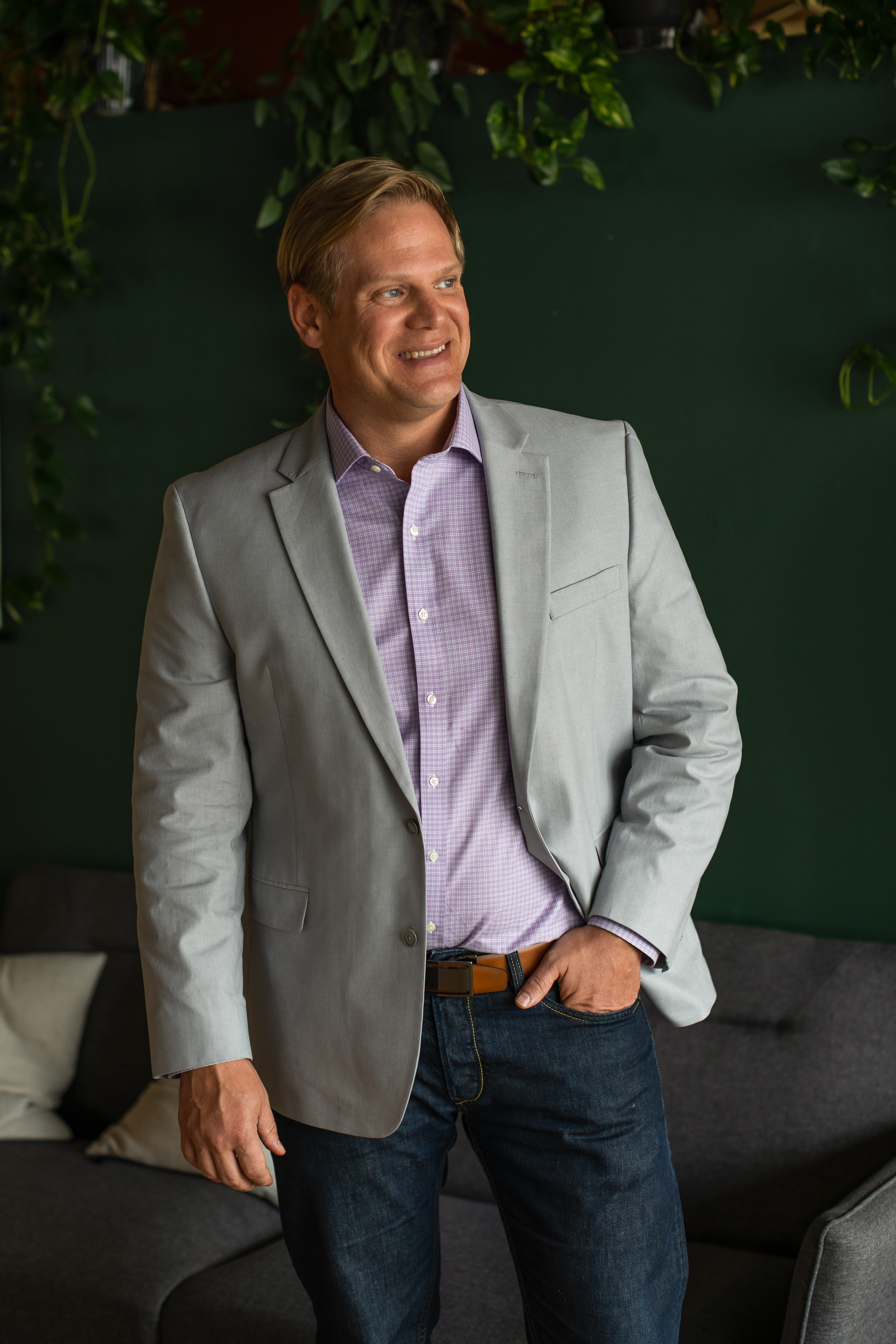
Ryan Poole
Founder of Maxximus. Lost his twin brother at 16. Father of Everett (9). 27 years in real estate sales. West Palm Beach, FL. Built Maxximus to help men reconnect with themselves, with others, and with their purpose. His forthcoming book, Becoming a Man: The Maxximus Method for Building the Man You Were Meant to Be, is in progress.